
- By Admin
- 18 June, 2026
- 5 min Read
When a Rig Goes Down, Can Your Air Cargo Partner Keep Up?
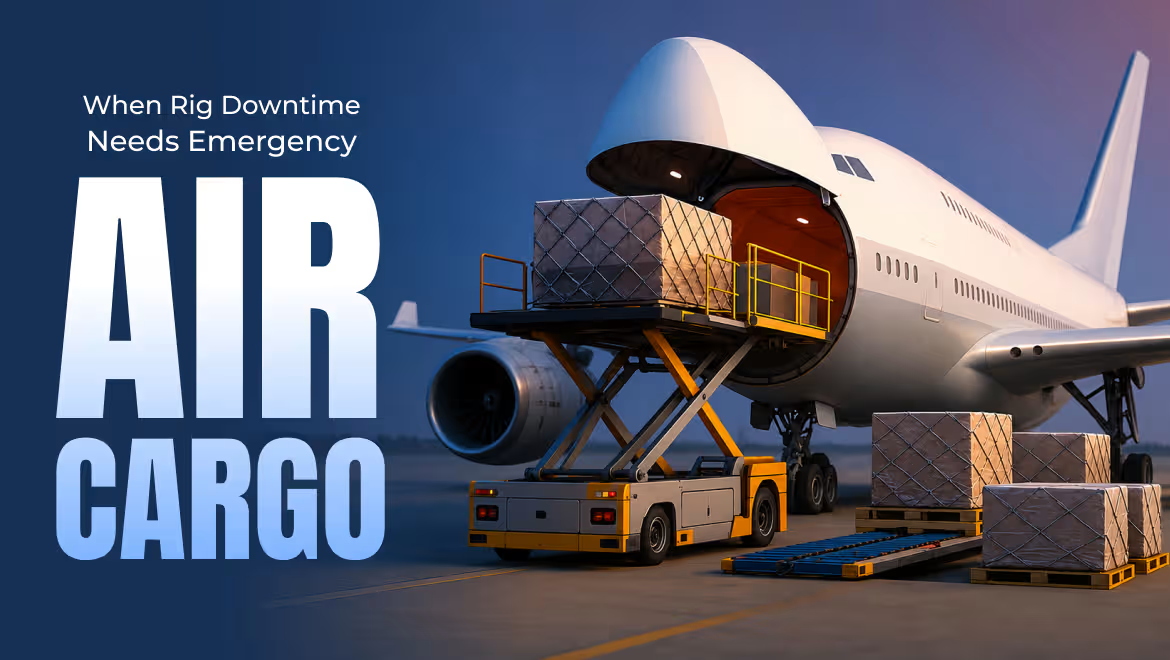
A drilling rig in the desert or offshore in deep water doesn't pause for paperwork. The moment a critical part fails, every hour down is an hour the operation pays for without producing.
For companies running rigs across the Middle East and beyond, downtime can run past $500,000 a day. At that cost, the real question isn't whether you need air cargo. It's whether your partner can deliver when it matters.
Commercial carriers work on fixed schedules, fixed routes, and fixed cargo rules. Oil and gas operations work on none of those terms.
The Real Cost of Downtime
Every oilfield operator knows the number. A stalled rig isn't an idle asset; it's a daily loss climbing into six figures before lunch. No part, no drilling, no revenue.
Delayed parts also push back completion timelines, disrupt crew rotations, and trigger penalty clauses. A two-day delay on a $600,000-a-day rig is over a million dollars gone before the part even arrives.
Why Commercial Carriers Can't Solve This
Oilfield logistics has a problem most freight networks aren't built for: dangerous goods. This gap is especially visible across the air cargo Dubai market, where rig parts and hazmat shipments routinely exceed what scheduled carriers are willing or able to take on.
- The Hazmat Wall - Drilling runs on hazmat: explosives for perforation, compressed gases, flammable liquids, corrosive chemicals, radioactive sources for well logging. Commercial airlines refuse this cargo or bury it under restrictions that add days to transit. A part that should move in hours gets stuck at a terminal because no one commercial is certified to load it.
- The Size Wall - Blowout preventers, drill collars, mud pumps, generator sets. Standard freighters have weight, dimension, and door limits that don't fit oilfield equipment, and scheduled space is booked weeks out, no use when you needed the part yesterday.
The Remote Location Problem
Rigs don't sit next to international airports. They sit in deserts, offshore platforms, basins hundreds of kilometers from the nearest scheduled cargo route. Commercial freight is built around major hubs and predictable volume. A remote rig in the Gulf, the Permian, or West Africa isn't on that map.
This forces a bad choice: route the part through multiple transfers and hope nothing slips, or accept the rig stays down longer than it should.
What Oil & Gas Operators Actually Need
Strip away the jargon and the requirement is simple. Operators need a charter partner who:
- Is available 24/7
- Can legally move dangerous goods
- Can land oversized freighters at or near remote rig sites worldwide
- Treats speed as a commitment, not a best-effort promise
That's the baseline for a productive rig, not a wish list!
How Elite Aviation Champions This Challenge
This is the exact gap Elite Aviation is built to close, running a dedicated air cargo charter service engineered around oil and gas, not bolted onto a generic freight model.
- Dedicated AOG Response - When a part is grounding your rig, Elite treats it as Aircraft On Ground priority, no queue, no waiting on an airline's calendar.
- DG-Certified Freighters - Elite's network handles dangerous goods including explosives, gases, flammable and radioactive materials, with certified crews and full regulatory compliance pickup to delivery. The hazmat commercial carriers turn away is routine cargo here.
- Worldwide Routing to Remote Rigs - Through access to a global fleet, from narrow-body freighters to wide-body aircraft like the Boeing 747F, Elite routes blowout preventers, drill collars, and mud pumps directly to or near remote rig locations, wherever they sit.
- Single Point of Contact - One coordinator manages the charter end to end: aircraft sourcing, customs clearance, ground handling, delivery tracking. No chasing departments while the clock runs.
- Guaranteed SLAs - Speed is built into the commitment, not left to chance. Operators get a firm delivery window backed by live air cargo tracking on each shipment, so that there's full visibility from wheels-up to rig-side delivery, not a guess.
Built for Companies That Can't Afford to Wait
For operators like ADNOC and the oilfield service firms supporting them, the margin for error on logistics is close to zero. A late part doesn't just cost money; it costs operational credibility. Elite's charter model removes that risk: certified for cargo commercial carriers won't touch, fast enough to reach locations they can't.
Operating out of the UAE sharpens this advantage further. As an air cargo charter Dubai specialist based in one of the world's busiest air cargo hubs in Dubai, Elite outpaces most air cargo companies Dubai-wide on reach and response. Add live air cargo monitoring on every shipment, and you get full visibility from wheels-up to rig-side delivery, not a guess.




-service-and-when-do-you-need-it-2.avif)