
- By Admin
- 16 September, 2026
- 7 min Read
Wet Lease vs Dry Lease. Which Aircraft Leasing Model Fits Your Business?
Growing an airline or a corporate flight operation in the Gulf almost always leads to the same question. Do you buy an aircraft, or do you lease one? And if you lease, do you go with a wet lease or a dry lease? The answer changes depending on your route network, your crew capacity, and how fast you need to scale. This guide breaks down both models so you can make a decision with confidence and shows why more operators are turning to Elite Aviation for aircraft leasing in Dubai.
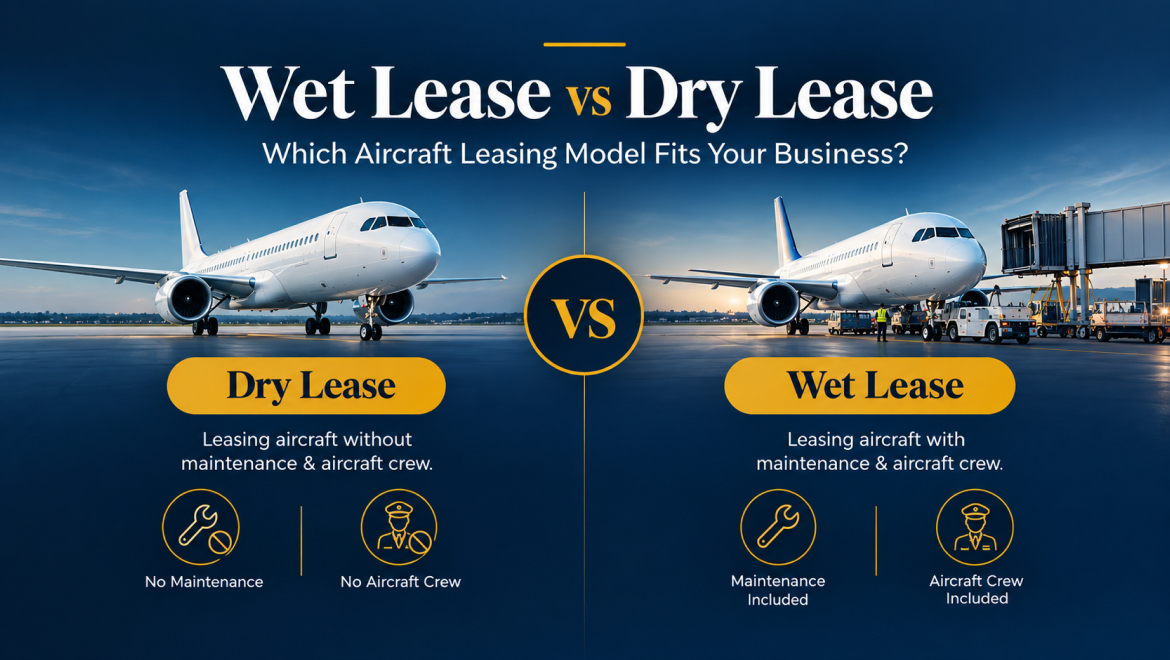
What Is a Wet Lease?A wet lease is an arrangement where the leasing company provides the aircraft along with the crew, maintenance, and insurance. This is often called an ACMI lease, standing for Aircraft, Crew, Maintenance, and Insurance. The lessee pays for fuel, airport fees, and other operating costs, but everything else is handled by the lessor.
Wet leasing is common when an airline needs extra capacity fast. Seasonal demand spikes, a grounded fleet, or a new route that hasn't been tested yet are all situations where a wet lease makes sense. The operator gets an aircraft in the air within days rather than months, without hiring or training new crew.
The tradeoff is cost and control. Wet leases carry a higher price per flight hour because the lessor is covering staffing and maintenance risk. The lessee also has less say over crew scheduling and aircraft branding, since the lessor's crew and, in many cases, the lessor's livery remain on the aircraft.
What Is a Dry Lease?A dry lease is the opposite setup. The lessor provides only the aircraft. The lessee supplies its own crew, handles its own maintenance program, and carries its own insurance. Dry leases are typically longer term, often running from several years up to a decade, and are used by operators who already have the staffing and infrastructure to run a fleet.
This model suits airlines and charter operators expanding a permanent fleet rather than covering a short term gap. Because the lessee controls the operation end to end, the aircraft can be painted in the operator's own colors and integrated fully into its schedule. Costs per flight hour are usually lower than a wet lease, but the lessee takes on more operational and regulatory responsibility, including certification, crew licensing, and maintenance compliance under its own air operator certificate.
Wet Lease vs Dry Lease. Key Differences Factor Wet Lease Dry Lease Crew Provided by lessor Provided by lessee Maintenance Lessor's responsibility Lessee's responsibility Insurance Included Arranged by lessee Typical term Short term, weeks to months Long term, years Cost per flight hour Higher Lower Operational control Limited Full Best for Sudden demand, route testing, fleet gaps Fleet expansion, established operators When Does a Wet Lease Make Sense?A wet lease is the right call when speed matters more than long-term cost. If a carrier's aircraft is grounded for heavy maintenance, a wet lease keeps flights running without cancelling routes. Airlines testing new city pairs also use wet leases to gauge demand before committing to a dry lease or an outright purchase. Charter operators facing a sudden spike in bookings, during Eid travel or major events in the region, often lean on wet lease capacity rather than turning away business.
For companies exploring aircraft leasing companies in Dubai for the first time, a wet lease is also a lower-risk way to enter the market. There's no need to build a full crew and maintenance operation before the first flight. Elite Aviation works with clients across the UAE to structure wet lease arrangements that match seasonal and route-specific needs, backed by our network of aircraft and operating partners across the region.
When Does a Dry Lease Make Sense?A dry lease fits operators with an established crew base and an existing maintenance program who simply need more aircraft. It's the standard route for airlines building out a long-term fleet plan, since the lower per-hour cost pays off over a multi-year term. Corporate flight departments that fly consistently and want a dedicated, branded aircraft also tend to prefer dry leasing over wet leasing.
Dry leasing does require more upfront work. The lessee needs to have its own air operator certificate, trained crew, and maintenance arrangements in place before the aircraft arrives. For operators that meet these conditions, dry leasing usually offers better long-run economics.
How to Choose Between the TwoStart with your timeline. If you need an aircraft in the air within weeks, a wet lease is almost always the practical choice. If you're planning fleet growth over several years, a dry lease will cost less over time.
Next, look at your operational readiness. Do you have licensed crew and an active maintenance program? If not, a wet lease removes that barrier while you build internal capacity. If you already have the infrastructure, a dry lease lets you use it fully rather than paying for services you don't need.
Finally, consider how often the demand recurs. One off events call for wet leasing. Recurring, predictable demand justifies the longer commitment of a dry lease.
Aircraft leasing in Dubai has grown alongside the region's expanding air cargo and private aviation sectors, and both leasing structures are widely available through established operators in the market. The right fit depends less on which model is "better" and more on where your business is in its growth.
Frequently Asked Questions What is the main difference between a wet lease and a dry lease?A wet lease includes the aircraft, crew, maintenance, and insurance. A dry lease includes only the aircraft, with the lessee supplying crew, maintenance, and insurance.
Which is cheaper, wet lease or dry lease?Dry leases generally cost less per flight hour over the long term, since the lessee is not paying for the lessor's crew and maintenance services. Wet leases cost more per hour but require far less setup time.
How long does a typical aircraft lease last?Wet leases usually run from a few weeks to several months. Dry leases are longer term, often spanning multiple years.
Can a small charter operator use a wet lease?Yes. Wet leasing is often the easiest entry point for smaller operators who want to add capacity without building out their own crew and maintenance operations.
Are aircraft leasing companies in Dubai regulated by the same authority?Aircraft leasing in the UAE falls under the oversight of the General Civil Aviation Authority, which sets the certification and safety standards that both wet lease and dry lease operators must meet.
Final ThoughtsIf you're weighing a wet lease against a dry lease for your fleet, talk to the Elite Aviation team about which structure fits your routes, your budget, and your timeline. We help operators across Dubai and the wider UAE put the right leasing plan in place, whether that means a short term wet lease or a long term dry lease agreement.
Contact Elite Aviation or call +971 4 584 7333 to discuss your aircraft leasing requirements and get a tailored quote.
We're here to assist you Contact Us